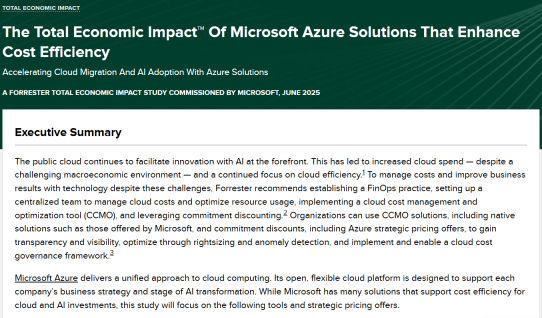
Organizations in the Forrester study started in a similar place: cloud bills were rising, visibility was limited, and it was difficult to forecast spend or hold teams accountable.
By putting a FinOps practice in place and using Microsoft’s native tools together, they were able to reshape how they manage cloud costs:
- Microsoft Cost Management gives detailed visibility into who is spending what, on which resources. Teams can allocate costs, set budgets, and configure alerts so overruns are caught early instead of at month-end.
- Azure Advisor analyzes configuration and usage telemetry, then recommends concrete actions such as rightsizing VMs, shutting down idle resources, or enabling autoscaling. These recommendations improve cost efficiency, performance, reliability, and security at the same time.
- The Azure pricing calculator lets you estimate costs for different architectures and usage scenarios before you deploy, so you can design with cost in mind instead of reacting after the fact.
In Forrester’s composite organization (a global enterprise with $1 billion in annual revenue and an initial $12.5 million Azure budget), using these tools together delivered:
- Direct cloud cost savings of 25% in Year 1 from better visibility, rightsizing, and following data-driven recommendations.
- Improved productivity of 24% by Year 3 for the FinOps team, because cost management tasks became more automated and less manual.
Those savings didn’t just reduce spend; they also freed up budget and time to reinvest in AI initiatives and other value-driving projects.





 Sign in with LinkedIn